
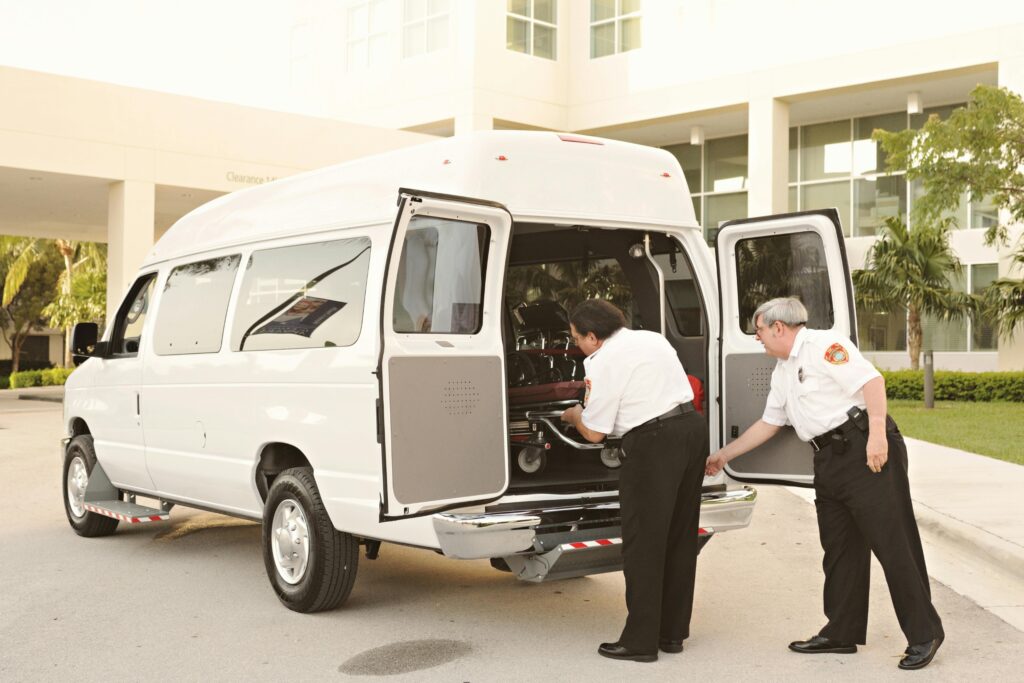
When most people hear the word “medical transportation,” their minds jump straight to ambulances, flashing lights, and urgent emergencies. But there is an entire category of medical transport that operates quietly, consistently, and without the drama — and it plays a role in healthcare that is far more significant than its low profile suggests. Non-emergency medical transportation, widely known as NEMT, is the scheduled, planned movement of patients who need medical care but do not require immediate emergency intervention. It serves dialysis patients who need rides three times a week, elderly individuals who can no longer drive themselves to follow-up appointments, and people with disabilities who depend on reliable transport to access treatment. Without NEMT, countless patients would miss critical care, leading to preventable complications, hospitalizations, and worse outcomes. Understanding what non-emergency medical transportation actually is — and why it matters — is essential for patients, caregivers, and anyone invested in a functional healthcare system.
What Non-Emergency Medical Transportation Actually Is
Non-emergency medical transportation is a broad term that covers a wide range of planned transport services designed to connect patients with medical care outside of emergency situations. Unlike emergency response, NEMT is scheduled in advance and tailored to the specific mobility and medical needs of the individual being transported. Services range from basic wheelchair-accessible vehicles and stretcher vans to more medically equipped transports that include monitoring capabilities for medically fragile patients who need supervision during transit but are not in an acute crisis.
The patients who rely on NEMT are remarkably diverse. They include elderly adults who have surrendered their driver’s licenses and have no family nearby. They include individuals with chronic conditions like end-stage renal disease who must attend dialysis sessions multiple times per week without exception. They include patients recovering from surgery who cannot safely operate a vehicle. They include people with developmental or physical disabilities for whom standard rideshare options are simply not accessible. Each of these individuals has a legitimate, recurring medical need — and without a dependable way to get to their appointments, their health outcomes deteriorate rapidly.
NEMT services are often coordinated through managed care organizations, Medicaid programs, or private insurance benefits, depending on the patient’s coverage and the state in which they reside. In the United States alone, Medicaid covers non-emergency medical transportation as a mandatory benefit, recognizing it as a fundamental component of healthcare access. The logistics behind scheduling, dispatching, and managing these rides involve specialized brokers and providers who work to match the right vehicle and level of care to each patient’s unique needs.
The Patient Populations That Depend on It Most
While non-emergency medical transportation is available to a wide range of individuals, certain patient populations depend on it at a level that most people never fully appreciate. Dialysis patients are among the most consistently reliant users of NEMT services. Because kidney failure requires life-sustaining dialysis treatment typically three times per week for three to four hours per session, missing even a single appointment can result in dangerous fluid buildup, electrolyte imbalances, and potentially life-threatening complications. For patients who cannot drive and lack consistent family support, NEMT is not a convenience — it is a medical necessity.
Elderly patients represent another enormous segment of NEMT users. As people age, driving becomes more difficult or impossible due to vision changes, cognitive decline, reduced reaction time, or physical limitations. Yet the need for healthcare appointments does not diminish with age — it intensifies. Routine follow-ups for hypertension, diabetes, heart disease, and cancer screenings require regular transportation, and when that transportation is unreliable or unavailable, older adults are forced to choose between missing care and burdening family members who may live far away or have demanding work schedules.
Patients with mental health conditions also frequently rely on NEMT to access psychiatric appointments, medication management visits, and outpatient therapy sessions. Transportation barriers are one of the most commonly cited reasons for missed mental health appointments, and missed appointments contribute directly to medication non-compliance, symptom relapse, and emergency psychiatric interventions that are far more costly and disruptive than the original outpatient care. Addressing transportation as a social determinant of health is not a peripheral concern — it is central to meaningful mental health outcomes.
How NEMT Impacts Health Outcomes and Reduces Costs
The connection between reliable medical transportation and positive health outcomes is well-documented and compelling. When patients can consistently get to their appointments, they receive the preventive care, chronic disease management, and follow-up treatment that keeps smaller problems from becoming catastrophic ones. When transportation breaks down, the downstream effects ripple through the entire healthcare system. Missed dialysis sessions lead to emergency room visits. Skipped medication management appointments lead to uncontrolled conditions. Delayed follow-up care after surgery leads to complications that require readmission.
Research has consistently shown that transportation barriers are a leading cause of missed medical appointments in the United States, with studies estimating that approximately 3.6 million Americans miss or delay medical care each year due to lack of transportation. The financial consequences of this are staggering. Emergency department visits that result from preventable complications cost multiples more than the routine care that was missed. Hospital readmissions triggered by gaps in follow-up care drive up insurance costs, strain hospital resources, and worsen patient outcomes across the board.
From a purely economic standpoint, investing in reliable non-emergency medical transportation is a cost-containment strategy as much as it is a patient care strategy. Medicaid programs that provide robust NEMT benefits consistently see reductions in avoidable emergency utilization. Managed care organizations that integrate transportation coordination into their care management models report better chronic disease management scores and higher patient satisfaction ratings. The math is straightforward: getting patients to their appointments on time and consistently is cheaper, by a significant margin, than managing the crises that result when they cannot get there.
The Challenges Facing the NEMT Industry
Despite its critical importance, non-emergency medical transportation faces a range of significant operational and systemic challenges that affect service quality, reliability, and access. One of the most persistent issues is driver shortage. NEMT providers require drivers who are not only licensed and insured but also trained in passenger assistance, disability sensitivity, and in many cases, basic first aid. Recruiting and retaining qualified drivers in a competitive labor market is an ongoing struggle, and turnover in the industry is high, which leads to inconsistent service quality.
Scheduling and coordination complexity is another major challenge. Unlike a standard rideshare pickup, NEMT rides involve patients with highly specific needs — particular vehicle types, arrival windows tied to medical appointment times, return trips that depend on how long the appointment actually takes, and sometimes multiple patients on a single route. Getting the logistics right requires sophisticated dispatching systems and experienced coordinators, and when things go wrong — a late pickup, a missed return ride — the consequences for patients can be serious. A dialysis patient left waiting for hours after treatment is not a minor inconvenience; it is a safety concern.
Reimbursement rates from Medicaid and other payers have also historically lagged behind the actual costs of operating quality NEMT services, creating financial strain for providers and in some cases driving smaller operators out of the market. The rise of NEMT brokerage models, where a single broker manages a network of transportation providers on behalf of a state Medicaid program, has helped with coordination in some regions but introduced new quality control concerns in others. Ensuring that cost savings from brokerage arrangements do not come at the expense of patient safety and service reliability remains a central tension in the industry.
Technology’s Growing Role in NEMT
Technology has begun to transform how non-emergency medical transportation is scheduled, managed, and monitored, and the changes are making the system meaningfully more efficient and patient-friendly. Digital platforms and mobile applications now allow patients, caregivers, and healthcare providers to schedule NEMT rides directly, track vehicle locations in real time, and receive automated notifications about driver arrivals and delays. This level of transparency reduces anxiety for patients who depend on timely pickups and gives healthcare facilities better visibility into when their patients will arrive.
On the operations side, route optimization software has significantly improved the efficiency of NEMT fleets, allowing providers to serve more patients with fewer vehicles by intelligently grouping trips without compromising individual appointment times. Electronic health record integrations are beginning to allow care coordinators to arrange transportation directly within the clinical workflow, reducing the administrative burden on both patients and medical staff. Some platforms now offer predictive analytics that can flag patients at high risk for missed appointments due to transportation challenges before those gaps in care actually occur.
Telehealth has also introduced a new dynamic to the NEMT conversation. As virtual visits have expanded access for some patients, they have highlighted how persistent the transportation gap remains for others — particularly elderly patients and those with limited digital literacy who still need in-person care. Rather than replacing NEMT, telehealth has helped clarify exactly which appointments truly require physical presence, allowing transportation resources to be concentrated where they are most clinically necessary. The future of NEMT will almost certainly be shaped by continued technological integration, and the providers and systems that embrace these tools will be best positioned to deliver consistent, high-quality service.
Conclusion
Non-emergency medical transportation is one of those essential services that operates largely out of public view yet underpins a significant portion of the healthcare system’s ability to function. It is the ride that gets a dialysis patient to treatment on a Tuesday morning. It is the wheelchair van that brings an elderly woman to her oncology follow-up. It is the scheduled transport that ensures a patient with a serious mental health condition does not fall through the cracks between appointments. When NEMT works well, patients stay healthier, hospitalizations are avoided, and healthcare dollars are spent far more efficiently. When it fails, the consequences land hardest on the populations who are already most vulnerable. Recognizing non-emergency medical transportation not as a logistical afterthought but as a genuine pillar of healthcare access is the first step toward advocating for better funding, stronger standards, and smarter systems that serve every patient who needs a ride to stay well.