
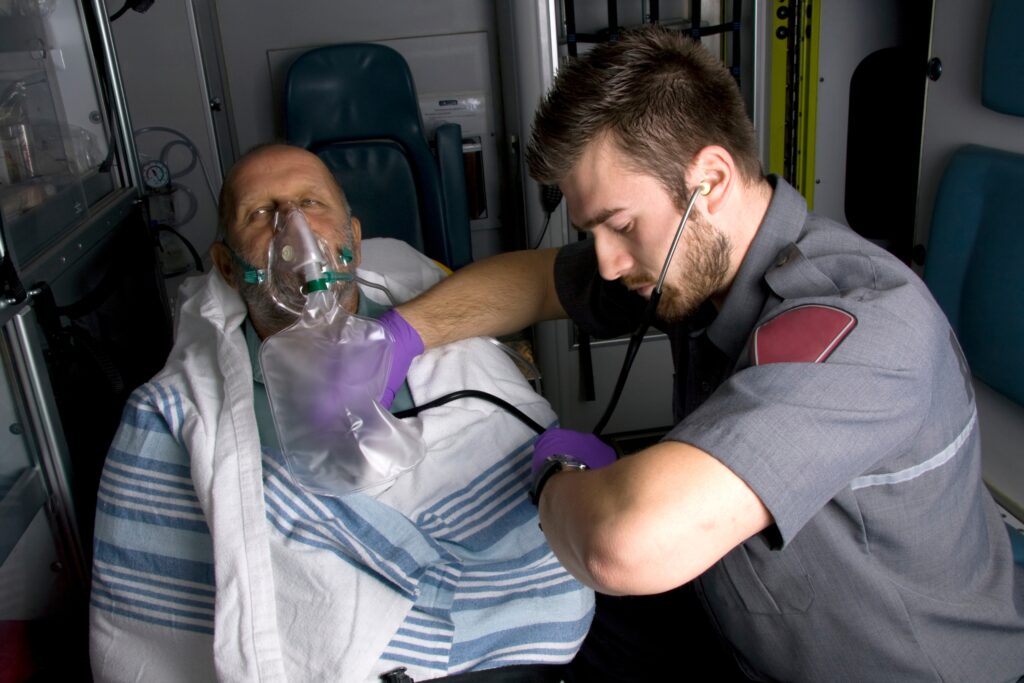
When an ambulance pulls up with its sirens blaring and lights flashing, most people instinctively step aside — but very few actually know what happens once those back doors close. An ambulance is not just a vehicle that drives patients to the hospital. It is a fully equipped, mobile emergency care unit staffed by trained medical professionals who are already working to save lives the moment they arrive on scene. Understanding what goes on inside an ambulance can reduce fear, set realistic expectations, and even help bystanders respond more effectively during a crisis. From the advanced life-support equipment packed into every corner to the critical decisions paramedics make under pressure, emergency medical response is a deeply coordinated system. This guide breaks down the full picture — what the crew does, what tools they carry, and how every second inside that vehicle is used with purpose and precision.
The People Inside: Who’s Actually Running the Call
One of the most misunderstood aspects of emergency medical response is who exactly is inside the ambulance and what their qualifications really are. Not every ambulance crew is the same. Depending on the level of service, a unit may be staffed by Emergency Medical Technicians (EMTs), Advanced EMTs, or Paramedics — and the difference between those roles is significant. EMTs are trained in basic life support, which includes CPR, bleeding control, oxygen administration, and patient assessment. Paramedics, on the other hand, undergo far more extensive clinical training and are authorized to perform advanced interventions such as intubation, intravenous medication administration, cardiac monitoring, and surgical airway management.
Most advanced life support (ALS) ambulances operate with at least one paramedic on board, often paired with an EMT or a second paramedic. Basic life support (BLS) units are typically staffed by two EMTs and are dispatched for lower-acuity calls or as a first response while an ALS unit is en route. In some regions, fire department personnel also respond alongside ambulance crews, adding another layer of trained responders to a scene. Understanding this layered system helps patients and families know that the level of care they receive is carefully matched to the nature of their emergency.
Beyond certifications, the crew’s ability to communicate calmly with a frightened patient while simultaneously making rapid clinical decisions is a skill that takes years to develop. They are trained not only in medicine but in crisis communication, cultural sensitivity, and managing chaotic environments. The human element inside an ambulance is just as critical as the equipment that surrounds it.
The Equipment: What’s Packed Into Every Corner
Step inside an ambulance and the sheer density of equipment is immediately striking. Every cabinet, drawer, and wall mount serves a specific clinical purpose. Modern ambulances — particularly ALS units — are essentially rolling emergency departments. The equipment inside is organized for speed and accessibility, because in a medical emergency, searching for a tool is not an option.
At the core of any ambulance is the cardiac monitor and defibrillator, a device capable of reading a patient’s heart rhythm in real time and delivering a life-saving electrical shock when necessary. Alongside it, you will find a portable ventilator, suction devices, oxygen tanks, and a full airway management kit that includes endotracheal tubes, bag-valve masks, and supraglottic airway devices. IV supplies, saline bags, syringes, and a formulary of emergency medications — including epinephrine, nitroglycerin, morphine, and dextrose — are stocked and restocked after every call.
Trauma equipment is equally comprehensive. Cervical collars, long spine boards, traction splints, tourniquet kits, and wound packing supplies are all within arm’s reach. Many units now carry point-of-care diagnostic tools such as glucometers, pulse oximeters, and capnography monitors that provide immediate data without waiting for lab results. Some advanced units are even equipped with portable ultrasound devices. Every item has a designated place, and crews conduct thorough inventory checks at the start of every shift to ensure nothing is missing when it matters most.
The First Five Minutes: What Paramedics Do on Scene
The first five minutes of emergency medical response are often the most consequential. The moment a crew steps off the ambulance, assessment begins — even before they reach the patient. They are scanning the scene for safety hazards, gathering visual cues about the nature of the emergency, and mentally preparing for what they are about to encounter. Scene safety is always the first priority, because an injured or incapacitated responder cannot help anyone.
Once they reach the patient, the crew conducts a primary assessment to identify and immediately address life threats. This follows a systematic approach: airway, breathing, circulation, disability (neurological status), and exposure. If a patient is not breathing, airway management begins right there. If there is severe bleeding, hemorrhage control takes priority over everything else. These decisions happen fast, often in under sixty seconds, guided by training and clinical instinct developed over hundreds of calls.
Simultaneously, one crew member is typically gathering a patient history — asking about symptoms, medical history, current medications, and allergies using the SAMPLE framework (Symptoms, Allergies, Medications, Past history, Last oral intake, Events leading to the emergency). This information is radioed ahead to the receiving hospital so the emergency department team can prepare. By the time the ambulance backs into the bay, the hospital already knows who is coming, what happened, and what has been done. Those first five minutes on scene are not chaos — they are a highly choreographed clinical response executed under extraordinary pressure.
En Route to the Hospital: Care Does Not Stop in Transit
A common misconception is that the ambulance simply transports a patient and real treatment begins at the hospital. In reality, care is continuous and often intensifies during transport. Once the patient is loaded and secured to the stretcher, the crew transitions into a moving treatment environment where they must work efficiently despite a vehicle in motion, road vibrations, and limited space.
During transport, paramedics continuously monitor the patient’s vital signs — heart rate, blood pressure, oxygen saturation, respiratory rate, and in many cases, a 12-lead electrocardiogram (ECG) to detect cardiac events like a STEMI (ST-elevation myocardial infarction). If a STEMI is identified en route, many EMS systems have protocols that allow paramedics to activate the hospital’s cardiac catheterization lab directly, shaving critical minutes off the time to treatment. In stroke cases, paramedics use validated screening tools to identify stroke symptoms early and pre-notify the receiving hospital to prepare a stroke response team.
Medications are administered, IV lines are established, and reassessments happen every few minutes to detect any changes in the patient’s condition. If a patient deteriorates, the crew can pull over to manage the situation more effectively or, in extreme cases, divert to the nearest available facility. Transport decisions are never made on autopilot — they are dynamic, evidence-based, and constantly re-evaluated. The ride to the hospital is not downtime. It is an extension of the emergency room, moving at highway speed.
Communication and Coordination: The Invisible Infrastructure
What most people never see is the communication network that keeps emergency medical response functioning. From the moment a 911 call is received to the second a patient is transferred to hospital care, a constant exchange of information is happening between dispatchers, crews, medical directors, and receiving facilities. This invisible infrastructure is what separates a well-functioning EMS system from a fragmented one.
Emergency dispatchers play a far more active role than many people realize. Trained in Emergency Medical Dispatch (EMD) protocols, they provide callers with pre-arrival instructions — including CPR guidance, choking relief techniques, and childbirth assistance — while simultaneously routing the closest appropriate unit to the scene. The information gathered during that call is relayed to the responding crew in real time, giving them a clinical picture before they even arrive.
On the medical side, paramedics in many systems have direct radio or phone contact with an online medical director — a physician who can authorize interventions beyond standard protocols or provide guidance on complex cases. This medical oversight ensures that even the most unusual presentations have a clinical safety net. After every call, detailed patient care reports are submitted electronically, feeding into quality improvement programs that continually refine protocols and training. Emergency medical response is not a series of isolated incidents — it is a data-driven, continuously evolving system built to get better with every call it handles.
When It’s Not a Trauma: Medical Emergencies Inside the Ambulance
While dramatic trauma cases often dominate public perception of ambulance calls, the reality is that the majority of emergency responses involve medical — not traumatic — emergencies. Chest pain, difficulty breathing, seizures, diabetic crises, strokes, overdoses, and severe allergic reactions make up a significant portion of daily EMS volume. These calls require a different but equally demanding clinical approach.
For a patient experiencing a suspected stroke, time is tissue. Every minute without treatment results in the death of nearly two million neurons. Paramedics are trained to identify stroke symptoms rapidly using tools like the Cincinnati Prehospital Stroke Scale and to transport patients directly to stroke-certified facilities, bypassing closer hospitals that may lack the necessary resources. For diabetic emergencies, a fingerstick glucose test performed in the field can guide immediate treatment — either oral glucose for conscious patients or IV dextrose for those who cannot swallow safely.
Overdose response has become one of the most common and clinically nuanced calls in modern EMS. The widespread availability of naloxone (Narcan) has given paramedics and EMTs a powerful tool to reverse opioid overdoses in the field. However, with the rise of synthetic opioids like fentanyl and its analogs, multiple doses are now often required, and post-reversal patient management has become increasingly complex. The ambulance, in these cases, becomes not just a transport vehicle but a critical intervention point that can mean the difference between life and death before a hospital ever enters the picture.
Conclusion
What happens inside an ambulance is far more complex, coordinated, and clinically sophisticated than most people ever realize. From the moment a crew is dispatched to the second a patient is handed off at the hospital, every action is guided by training, protocol, evidence-based medicine, and an unwavering commitment to patient outcomes. The equipment is advanced, the personnel are skilled, and the system behind them is built on layers of communication, oversight, and continuous improvement. For patients and families, understanding emergency medical response can reduce anxiety during one of life’s most frightening moments and foster greater trust in the professionals working to help. For society at large, recognizing the depth of care that happens in those few square feet of a moving vehicle is a reminder that emergency medicine does not begin at the hospital — it begins the moment those sirens turn on. Supporting well-funded, well-staffed EMS systems is not just a policy issue; it is a public health imperative that directly affects every community.